Categoria: Bookkeeping

  • How Do Net Income and Operating Cash Flow Differ?

    There are so many words used that, in everyday life, may mean close to the same thing but, when used in the world of finance or accounting, they mean only one thing and should never be confused. Assume ABCO Consulting Company earns $100,000 in mid-December but allows the customer to pay in January. ABCO’s net income is increased in December, but its Cash account will not increase until January. “If you’re talking about practices, a high-net-worth client is someone who has over five million in assets,” says Nikitenko. “[But] if you’re talking about Forbes and the top people listed on there, a high net worth is in the billions, so that’s a very very relative term.”

    • However, it doesn’t always show an accurate picture of your company’s financial status.
    • We provide a much more detailed walkthrough on how to calculate net income here so do give that a read if you want to learn more.
    • Investing and financing transactions, such as borrowing, buying capital equipment and making dividend payments, are excluded from operating cash flows and are reported separately.

    If there are one-off events, for example, paying for stolen goods, it may not be an accurate total reflection of the company’s typical liquidity. In the formula, the cash balance is used to describe all cash the company holds plus highly liquid assets. Moreover, current liabilities include all financial and non-financial liabilities. And this is why the primary differences in cash flows vs net income stem from when money is reported as earned.

    Net Income Definition and Example

    The main differences–and thus the possible limitation–between these two figures is mainly due to how non-cash items are treated on each of the statements. This difference leads you to two separate figures related to your operational efficiency and profitability. Cash inflows from operating activities tend to be cash receipts from the sale of goods. Cash outflows include any use of cash during the period like payments to suppliers, employees, utilities, and more. Things get even more complicated if you, like many small businesses, get paid on terms (for example, if you receive a deposit for work you haven’t completed).

    It’s also used to track financial progress by comparing annual statements year over year. If net worth grows over time, it means that business overall is growing, which is especially helpful because looking at assets or debt alone do not paint the full picture. So, by optimizing for both metrics rather than focusing on one over the other, you can gain a more comprehensive view of your finances and retain a strong position for your business by all measures. You may also hear net income referred to as the bottom-line profit, as it’s presented at the bottom line of the income statement (a.k.a profit and loss statement).

    In the cash flow from operations section, the $100 million of net income (“bottom line”) flows from the income statement. The three sections of the cash flow statement (CFS) are added together, but it is still important to confirm the sign convention is correct, otherwise, the ending calculation will be incorrect. So while the decline isn’t cause for alarm, you want to make sure you continue to trend upward—otherwise this move wasn’t a profitable one.

    How to Improve Cash Flow: 10 Tips for Small Businesses

    Both cash flows and net profits are important components of financial statement and serves different purposes. While the cash flows depict cash movements under different categories, net profits shows results of business operations. It is important for an organization to have adequate net profits how to sell preferred stock as per the desired rate of return along with which it should also hold strong cash position. Weak cashflows may lead to liquidity crunch situation which in turn may affect business profitability. Therefore, both cashflows and net profits are interdependent and important for stakeholders.

    Prepaid Expenses Differences

    Operating income is a company’s profit after operating expenses are deducted from total revenue. Operating income shows the amount of profit a company generates from its operations without interest or tax expenses. Operating income is calculated by taking gross income and subtracting operating expenses, which include selling, general and administrative expenses (SG&A), depreciation and amortization. Net income is earned revenues minus incurred expenses, including taxes, and costs of goods sold (COGS). It follows gross income and operating income and is a final monthly, quarterly, or annual report.

    Net Income Definition

    Operating cash flow is calculated by subtracting operating expenses from total revenue. In short, it measures how much cash flow is generated from a company’s main business by excluding any other sources of income, such as capital gains from investments. Cash flow from operations is important because it shows how successful a company’s primary business is performing. Financial statements provide a wealth of information about a company and its operations. Many investors, analysts, and creditors refer to a firm’s net income and operating cash flows to understand how well a company has performed and used its cash in operations.

    However, it’s important to note that a company should not hold too much cash as it is vital to its success that most of its assets are generating income rather than sitting dormant. It is important to understand that net cash cannot be used interchangeably with net cash flow. The net cash flow of a company is calculated by subtracting all operation, financial, and capital dues from the cash earned by the company. Cash and cash equivalents are the most liquid current assets on a company’s balance sheet. Now that we’ve gotten into the nitty-gritty, let’s jump into what the point of net cash flow actually is (what, you don’t love doing math for fun?!).

    If profitability is faltering, you may want to look deeper into your expenses to see where you can find cost savings to retain your profitability going forward. Thus, you must monitor and assess both metrics simultaneously to make better and more sustainable decisions about the future of your business. When using Finmark from BILL, you can quickly assess your net income in real-time using your current financial data.

  • Law Firm Bookkeeping and Accounting: A Completed Guide 2022

    accounting for law firms

    With the accrual method, revenues are recorded as they’re earned and expenses as they’re incurred, regardless of whether they’re immediately paid. By doing so, the costs earned in a given month or year are more closely matched to the revenues earned. Taxes are a part and parcel of all businesses and so, law firms are no exceptions; yet, not all law firms are unaware of tax deductions. There may be times when they fail to take advantage of legitimate tax deductions. Law firm accounting may look like an uphill task, and of course, it is to a great extent; yet it lets you have immense peace of mind when you have all your accounting records accurate. These are some of the most crucial factors that contribute to the growth and expansion of your law firm.

    These include balance sheets, income statements, and tax returns that reflect the true financial health of a law firm’s business accounts. They interpret these reports to provide insights into cost-saving opportunities or areas where business revenue generation can be enhanced. Accounting software simplifies the financial management process for law firms.

    How Digitslaw Can Help with Legal Accounting

    Legal accounting is going to require a professional accountant at one point or another, so don’t hesitate to call one when needed. You can take the additional step and learn about the accounting cycle to stay compliant and transparent with your financial health. If you don’t have an effective bookkeeping and accounting system in place, you risk missed payments, late payments, missed filings, late filings, or a mismanagement of funds. A less-than-stellar reputation can lead to a loss of business and even run your law firm into the ground. Therefore, it’s imperative that you run your business based on a fool-proof financial process.

    • Many legal accountants find it difficult to obtain accurate accounting data, which further affects their future growth decisions.
    • But no matter how much knowledge you hold, this guide will help you attain a high level of fluency in both practices.
    • While you spend many years honing your expertise and experience to become a professional attorney and run your law firm, you didn’t learn about bookkeeping and accounting for law firms.
    • In this section, we’ll take a quick look at how the top 10 legal accounting software solutions compare against each other in terms of pricing.

    IOLTA accounts are designed to keep client funds separate from your typical business or operating account—where you are allowed to accrue interest. So, with double-entry accounting, every financial transaction gets sorted into a specific category (assets, liabilities, or equity). Double entry accounting is a helpful practice for lawyers to know about, as it provides an extra guard against errors.

    Get clear on trust account rules

    Smaller practices may find comfort in using cash basis accounting due to its simplicity. There are four subscription levels which means that you can start small and upgrade to a higher plan as your business grows. In addition, Clio integrates with a good deal of third-party apps, including QuickBooks Online and Xero.

    accounting for law firms

    These funds held in a trust are not the law firm’s property but are individuals or institutions known as trustees. Lawyers are not accountants and they often make the same common mistakes when it comes to accounting for law firms. Legal accounting and attorney bookkeeping mistakes have catastrophic consequences for your business, income taxes, and license. Below we’ll show you the most commonly fall short in accounting practice. Setting up and recording the chart of accounts for law firms isn’t just suggestions, they are requirements.

    Ensure you have the right bank accounts set up

    One of the most significant changes you face when transitioning from full-time employment to business ownership is the loss of tax withholding benefits. In addition, you may need to use clients’ funds on their behalf, in which case you must provide detailed reports about your activities to remain in compliance. The FUTA tax rate is 6%, which taxes wages up to the first $7,000 earned by the employee during the year. There are also state and sometimes municipal payroll taxes to be collected. Speak to your accountant to make sure you are correctly withholding each payroll tax. Also, ask if you are eligible to receive a tax credit for paying timely state unemployment taxes.

    • Let us show you how using a simple accounting software tool to send reports to your clients is going to make your work as easy as possible.
    • One should be an operating bank account and there should be a separate account for Interest on Lawyer Trust Accounts (IOLTA).
    • Once you’ve chosen an accountant to work with, use these questions to guide your initial conversation.
    • Hire the experts of The Profit Line to deal with your bookkepping and accounting while you focus your energy on developing your legal firm.

    Moreover, regular reconciliations ensure that all accounts—especially those containing client funds—are accurately maintained at all times. This process helps identify errors or discrepancies promptly in a business account. By doing this, they can prevent inaccuracies from snowballing into significant issues for a law firm. Double-entry accounting is a bookkeeping system that records each financial transaction in two separate accounts.

    Common mistakes

    Never miss out on any financial entry, stay connected and updated with the help of good accounting software. Why you want an accounting software for your legal practice is one of the most important questions to be solved and answered before you decide top 4 use cases of automated bookkeeping in 2023 to invest in the same. Having a target for a particular thing or software is what makes it a perfect fit, not the trending tag. However, they are distinct from each other and as a law firm owner, it becomes imperative for you to learn about it.

  • How to Read a Balance Sheet Overview, Structure, Case Study

    the financial position of a company

    Leaders must grasp the broader impact of their decisions and advocate for practices that ensure environmental care and social good. This helps them build organizations that are principled and appreciated by today’s workforce. “72% of executives surveyed see ESG as an enabler rather than cost center,” according to a study from IBM. The only way to remain relevant in an ever-evolving environment is by being a lifelong learner. Leaders need to engage regularly in learning and become the model for team members, encouraging them to grow knowledge and skills.

    If splitting your payment into 2 transactions, a minimum payment of $350 is required for the first transaction. Updates to your application and enrollment status will be shown on your Dashboard. HBS Online does not use race, gender, ethnicity, or any protected class as criterion for admissions for any HBS Online program.

    Why Is a Balance Sheet Important?

    Companies try to manage cash flow to ensure that funds are available to meet these short-term liabilities as they come due. Thus, with the above information, we can conclude that the company’s balance sheet is forms and associated taxes for independent contractors balanced as both the factors, such as assets and liabilities or shareholder’s equity, are the same. Both an annual and 10-K report can help you understand the financial health, status, and goals of a company.

    the financial position of a company

    While there are many valuation approaches, the most common is a type of discounted cash flow methodology. These cash flows could be in the form of projected dividends, or more detailed techniques such as free cash flows to either the equity holders or on enterprise basis. Other approaches may include using relative valuation or accounting-based measures such as economic value added. The three main components of the statement of financial position are assets, liabilities, and equity, which are broken down into various categories.

    Financial Statement = Scorecard

    With the income statement and balance sheet under our belt, let’s look at the cash flow statement and all the insights it tells us about the business. One of the main tasks of an analyst is to perform an extensive analysis of financial statements. In this free guide, we will break down the most important types and techniques of financial statement analysis.

    • In all cases, net Program Fees must be paid in full (in US Dollars) to complete registration.
    • In this example, Apple’s total assets of $323.8 billion is segregated towards the top of the report.
    • Within each section, the assets and liabilities sections of the balance sheet are organized by how current the account is.
    • Balance sheets can be used with other important financial statements to conduct fundamental analysis or calculate financial ratios.
    • Here, the assets are higher than the liabilities, which means the company is in a good financial position.

    Less-experienced investors might get lost when they encounter a presentation of accounts that falls outside the mainstream of a so-called “typical” company. Please remember that the diverse nature of business activities results in a diverse set of financial statement presentations. This is particularly true of the balance sheet; the income statement and cash flow statement are less susceptible to this phenomenon. The financial statements used in investment analysis are the balance sheet, the income statement, and the cash flow statement with additional analysis of a company’s shareholders’ equity and retained earnings.

    It also helps reaffirm stakeholders’ vision and mission by evaluating the pace toward their goals and refining their strategies. Any assets or liabilities that are expected to extend beyond the next year fall into this category. For many companies, these would include plant equipment, property, total operating expense, and general needs for running the business. Borrowings and leasing contracts for plant and equipment can also be considered as long-term liabilities. That’s because a company has to pay for all the things it owns (assets) by either borrowing money (taking on liabilities) or taking it from investors (issuing shareholder equity). Using the above financial ratios, we can determine how efficiently a company is generating revenue and how quickly it’s selling inventory.

    What are the advantages of financial statement analysis?

    Assets are on the top or left, and below them or to the right are the company’s liabilities and shareholders’ equity. A balance sheet is also always in balance, where the value of the assets equals the combined value of the liabilities and shareholders’ equity. This means that assets, or the means used to operate the company, are balanced by a company’s financial obligations, along with the equity investment brought into the company and its retained earnings.

    the financial position of a company

    Review the key financial statements within the context of the relevant accounting standards. In examining balance sheet accounts, issues such as recognition, valuation and classification are keys to proper evaluation. The main question should be whether this balance sheet is a complete representation of the firm’s economic position. When evaluating the income statement, the main point is to properly assess the quality of earnings as a complete representation of the firm’s economic performance. Investors should start by learning how to interpret key figures on a company’s balance sheet, income statement, and statement of cash flows.

    What Key Financial Statements Should I Understand When Analyzing a Company?

    If you are a shareholder of a company or a potential investor, it is important to understand how the balance sheet is structured, how to read one, and the basics of how to analyze it. As you prepare a statement of financial position, be more critical than a passive user of the statement of financial position. It displays information in the form of an accounting equation with assets on the left and liability and equities on the right (illustrated below).

    The cash flow statement will help us understand the inflows and outflows of cash over the time period we’re looking at. Using the financial ratios derived from the balance sheet and comparing them historically versus industry averages or competitors will help you assess the solvency and leverage of a business. Below, we provide a brief overview of the statement of financial position, including the information it should contain and when you need to prepare one.

    If they don’t balance, there may be some problems, including incorrect or misplaced data, inventory or exchange rate errors, or miscalculations. However, it is worthwhile producing a statement of financial position on a regular basis, for example, at the end of each financial month and quarter. This will provide valuable insights, helping you to keep track of your company’s finances and growth over time, and informing future decision-making.

  • Blockchain Accounting: The Evolution of Financial Transparency

    The blockchain is a network that has no dependence on a single service provider and ensures the integrity of records. Blockchain security is an important aspect of projects built using the blockchain technology. Accountants will eventually need to represent as a mediator between clients and technologists. For this role, a strong understanding of blockchain accounting is necessary. Finally, the introduction of blockchain technology is transforming accounting to another level.

    • This practice will be mandatory over time as a 5 billion VAT gap in Europe needs to be patched.
    • For example, the “Big Four” accounting firms, including Deloitte, Ernst & Young, PwC, and KPMG, are adopting blockchain to their system.
    • Hence, we also manually reviewed the 15 articles identified in the LDA analysis as the most representative of each topic.
    • The results indicate that the most widely discussed topics are the changing role of accountants, new challenges for auditors, the opportunities and challenges of blockchain technology application, and the regulation of cryptoassets.
    • This way, the user maintains complete privacy, making this a zero-trust implementation.

    According to IBM, blockchain’s implementation outside of the “Bitcoin environment” was somewhat delayed, because established businesses and accounting professionals did not initially see its benefit in other industries. One of the challenges for implementing blockchain is context (Stratopoulos and Calderon, 2018). It is unlikely that small firms would want to make their transactions publicly available or that they would benefit from blockchain accounting as much as big companies. Distributed ledgers may not be attractive or even needed by every company, so there is a real need to ascertain exactly what the up and downsides of implementing blockchain are.

    Revolutionizing E-Commerce: Stasum’s Strategic Unleashing of Blockchain Evolution

    Van Hoek (2019) notes that a need for transparency and visibility motivates blockchain implementation and that the main barrier facing such an implementation is a lack of understanding of how to integrate and leverage blockchain investments. From an accounting perspective, cryptocurrencies fulfill the asset definition given by the conceptual framework of international financial reporting standards (IFRS) (Morozova et al., 2020; Ram et al., 2016). The advent of cryptocurrencies has also raised questions about the role of central banks. Currently, central banks continue to supply money, both virtually and physically.

    • Additionally, more real cases will need to be explored to see how technology might disrupt the auditing community (Marrone and Hazelton, 2019).
    • This transparency not only fosters trust among stakeholders but also streamlines the auditing process, saving both time and resources.
    • We expect that blockchain will involve more multi-tasked teams with diverse knowledge and skills to generate additional synergies.
    • It is important to examine blockchain first by getting a better understanding of the technology and then examining the accounting and auditing implications.

    Teams, management and government bodies implementing blockchain and making decisions based on data obtained from blockchain will also need new skills to adapt to the changing environment (Pimentel et al., 2019; Siew et al., 2020). Therefore, we propose that universities and higher education institutions should change and improve the curriculum of accounting and finance programmes to help students develop the above-mentioned skills. It is essential to start making the changes now as current students will soon become accounting and auditing practitioners as well as managers working with blockchain and other disruptive technologies. Additionally, more real cases will need to be explored to see how technology might disrupt the auditing community (Marrone and Hazelton, 2019).

    PROFITABILITY OF THE ENTERPRISE: CONCEPT, ESSENCE AND KEY INDICATORS

    With the World Wide Web, the first websites were rudimentary, but now are deeply embedded in daily lives and economies. So with blockchain, it will likely develop into and become a more prevalent feature of daily and economic life. Blockchain’s decentralized nature also helps act as proof that a transaction happened. This website is using a security service to protect itself from online attacks. There are several actions that could trigger this block including submitting a certain word or phrase, a SQL command or malformed data.

    2 New challenges for auditors

    The main advantage of blockchain technology is that once a transaction is approved by the nodes in the network, it cannot be reversed or re-sequenced. The inability to modify a transaction is essential for the blockchain’s integrity and ensures that all parties have accurate and identical records. Because blockchain is a distributed system, all changes to a ledger are transparent to all the members of a network. However, to be affordable for everyone, blockchain solutions need to be scalable to operate efficiently on a large scale. From this perspective, it is essential that blockchain solutions are integrated into ERP systems and with RFID, IoT and AI technologies to create fast, reliable and repeatable processes. Third, our study contributes to the accounting literature with a discussion of the potential future research trends related to blockchain for accounting.

    Three examples of Blockchain in Accounting fails

    Hence, given the need for auditors to detect and investigate transaction errors or fraud, the argument of auditors becoming obsolescent is not evident. In machine learning, there are many different text mining techniques, each designed to suit different types of data and different end purposes (see Wanner et al., 2014 for a comprehensive review). We used a Latent Dirichlet Allocation (LDA) model, which is well-suited to providing a systematic and non-biased method of investigating a body of literature what is marginal revenue formula to calculate (Cai et al., 2019; El-Haj et al., 2019; Black et al., 2020; Bentley et al., 2018; Fligstein et al., 2017). El-Haj et al. (2019, p. 266) explain that LDA leads to “wider generalizability, greater objectivity, improved replicability, enhanced statistical power, and scope for identifying ‘hidden’ linguistic features”. Research shows LDA to be a relevant and useful tool for working with both big and small literature corpora (e.g. Li, 2010; Asmussen and Møller, 2019; El-Haj et al., 2019).

    Yooatom to Unveil Origin 800, World’s First Smart Modular Power System at CES 2024

    Blockchain’s immutable nature comes from the fact that once a public consensus validates a transaction into the blockchain, it’s virtually impossible to alter or delete the transaction. This is why the mainstream multi-blockchain thesis is foolish; multiple blockchains reintroduce multiple sets of books, the very problem that blockchain was meant to solve; have a single source of truth. Blockchain was the answer to the issue of fooling people into believing a copy was authentic. EBSI can act as a certificate authority for identity but will depend on highly scalable secondary networks to process data exchange and storage needs to serve use cases and not inhibit innovation.

    The Future Of Blockchain In Accountancy

    This is due to the potentially huge importance of this technology due to its security, reliability and ability to use in various fields. This article is devoted to the review of blockchain technology, consideration of its basic principles, as well as prospects of implementation. Primarily, this technology stores information in blocks and connects it in chains. Blockchain can have a significant impact on the fields of accounting and auditing. Essentially, it can transform the whole process involved within those areas. However, some challenges still exist to its implementation in those fields.

  • Accounting Definition & Meaning

    Accounting & Cleaning Service Management Software

    The ARPL is a coalition of various advanced professional groups including engineers, accountants, and architects. Amanda Bellucco-Chatham is an editor, writer, and fact-checker with years of experience researching personal finance topics. Specialties include How to do Bookkeeping for Cleaning Businesses general financial planning, career development, lending, retirement, tax preparation, and credit. The cleaning industry has many unique accounting needs, so familiarizing yourself with these accounting tips is beneficial when you’re starting out.

    Highly rated payroll services, payment processing platforms, top point-of-sale systems and customer relationship management software are some popular types of integrations you may want to look for. Integration with systems you already use also cuts down on training time for employees. Let’s say a client just paid their invoice online, or money was withdrawn from your checking account to pay a utility bill. Most business owners opt for small-business accounting software to help automate the process and reduce the likelihood of error. If you use accounting software, it’s easy to connect the accounting software to your business bank accounts.

    What are the different types of accountants?

    Revenues and expenses recognized by a company but not yet recorded in their accounts are known as accruals (ACCR). By definition, accruals occur before an exchange of money resolves the transaction. The accounting profession covers a broad range of roles, including bookkeeping, tax planning, and audit. The four largest accounting firms globally include Deloitte, KPMG, PwC, and EY. Cost accounting focuses on a detailed break-up of costs for effective cost control.

    • Business moves fast, and many companies rely on in-progress projects and income to meet goals.
    • We also explain relevant etymologies or histories of some words and include resources further exploring accounting terminology.
    • Accountants may be tasked with recording specific transactions or working with specific sets of information.
    • These eight steps will introduce you to the accounting process (if you’re not yet familiar) and set you up to scale your business in a sustainable way.
    • It’s also worth noting that while all CPAs are accountants, not all accountants are CPAs.
    • Many small business owners do a combination of bookkeeping and accounting.

    Cost of Goods Sold (COGS) refers to the cost of goods that are either manufactured or purchased and then sold. Your business sales revenue minus the cost of goods sold equals your business’s gross profit. Whichever method you use, you need to track how many miles you drive for your cleaning business versus how many miles you drive for personal purposes.

    What Does an Accountant Do?

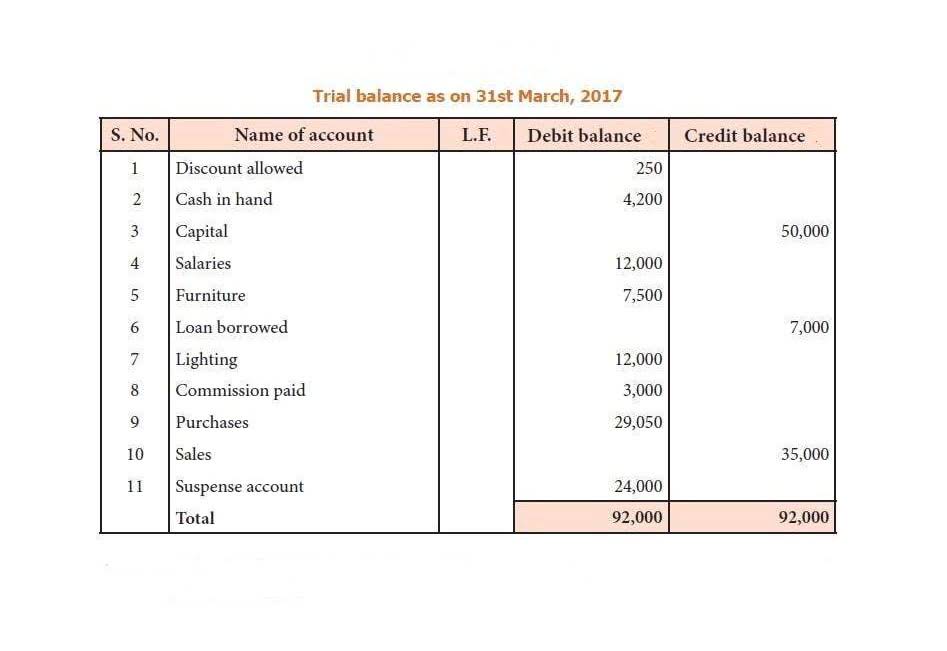
    Accountants prepare or generate trial balances at the conclusion of a reporting period to ensure all accounts and balances add up properly. In professional practice, trial balances function like test-runs for an official balance sheet. Overhead (O/H) costs describe expenses necessary to sustain business operations that do not directly contribute to a company’s products or services.

    Accounting & Cleaning Service Management Software

    The overall best bookkeeping software includes Zoho Books, FreshBooks, Xero, and Intuit QuickBooks. Bookkeepers need a strong grasp of all financial details in the company so they know if there are any inconsistencies. Both bookkeepers and accountants need to be comfortable working with numbers all day. Bookkeepers especially should https://www.bookstime.com/ be able to spot issues with daily expenses and make sure all the data points are tracked correctly. Taking online courses can be a great way to build job-ready skills in accounting. The Intuit Academy Bookkeeping Professional Certificate is a good place to build a foundation in the accounting field and qualify for entry-level jobs.

    Accounting 101: Accounting Basics for Beginners to Learn

    We wrote this accounting guide to ease you into the world of business accounting. By the end, you’ll feel ready to tackle your own business’s accounting (or find someone who can help). Generally speaking, however, attention to detail is a key component in accountancy, since accountants must be able to diagnose and correct subtle errors or discrepancies in a company’s accounts. The ability to think logically is also essential, to help with problem-solving. Mathematical skills are helpful but are less important than in previous generations due to the wide availability of computers and calculators. The Alliance for Responsible Professional Licensing (ARPL) was formed in August 2019 in response to a series of state deregulatory proposals making the requirements to become a CPA more lenient.

  • What Is Accounting? Definition, Objectives, Advantages, Limitation, Process

    accounting definition business

    This designation requires individuals to pass an exam and attain work experience. CPAs are well-respected strategic business advisors accounting and decision-makers. Positions CPAs hold include accountant, controller, chief financial officer and financial advisor.

    • Accounts payable refers to the amount owed by a business to its creditors or suppliers.
    • Financial scams and frauds in accounting practices have drawn attention of the users of the accounting information supplied by business enterprises.
    • Accounting is the medium of recording business activities and it is considered a language of business.
    • The revenue principle refers to the condition or points in time when the bookkeeper or accountant may record a transaction as revenue in the accounting book.
    • Accounting scandals happen when there is deliberate manipulation of financial statements for the benefit of the manipulator.
    • This branch of accounting has grown in response to the difficult tax laws such as relating to income tax, sales tax, excise duties, customs duties, etc.
    • If not carefully handled, it can harm your health.Thanks to the influx of accounting software, you can automate many of the recurrent and stressful accounting tasks.

    Other crimes AIG committed included stock price manipulation and bid-rigging. WorldCom was a telecommunication company run by CEO Bernie Ebbers that fraudulently inflated the company assets by about $11 billion. Investors lost over $180 billion as a result of this scandal while 30,000 jobs got lost. The U.S trading firm employed a big auditing firm, the same Arthur Andersen which was instrumental in the Waste Management Incorporation Fraud Scandal in 1998 to audit its books. Arthur Andersen covered up some of the scandals but the company’s debt could not be hidden.

    What is Accounting and Why it Matters For Your Business

    The Securities and Exchange Commission has an entire financial reporting manual outlining reporting requirements of public companies. In accounting, you’ll come across certain titles which appear to bear similar duties but actually have unique job descriptions. In this section, we’ll briefly review the roles of accountants vs. CPAs and tax professionals. Holiday pay for the leave accrued should then be calculated using an average of the 2 weeks in which they were paid. At the end of their contract (termination of employment) they should be paid in lieu for all holiday accrued during this 2-week period.

    accounting definition business

    The QuickBooks alternative integrates with over 100 applications to help businesses and individuals streamline their other work-related applications. Some of these third-party integrations include Bench, Slack, Gmail, Stripe, Fundbox, and MailChimp. FreshBooks has a free mobile app that makes it easy for users to access their accounting information from anywhere in the world.

    Learn business accounting today

    Cash flow (CF) describes the balance of cash that moves into and out of a company during a specified accounting period. Accounts receivable are sometimes called “trade receivables.” In most cases, accounts receivable derive from products or services supplied on credit or without an upfront payment. For instance, suppose you want to apply for a Small Business Association (SBA) loan through one of the big banks. You’ll need to provide, on average, three years of financial statements, plus a one-year cash flow projection. It’s virtually impossible to deliver any of these if you don’t have an accounting system in place. Many small businesses use software like QuickBooks to log and track income and expenses.

    • This may mean that the actual reference period takes into account pay data from further back than 52 weeks from the date of their leave.
    • In fact, the two types of accounting coincided with the development of joint-stock companies.
    • Tax accountants minimize tax liability and keep you compliant with the IRS.
    • A second definition considers capital the level of owner investment in the business.
    • Matos stays up to date on changes in the accounting industry through educational courses.

    Companies and businesses use the income statement to analyze and determine their financial positions, performance, and overall efficiency. This financial statement compares the performance of the company or business to other competitors in its industry. On the balance sheet, it is where you find and record the company’s assets, liabilities, and shareholder’s equity. It shows you the available assets the company has to work with, the amount it owes, and what shareholders own of the company’s assets.

  • Accounting for Research and Development Costs: The Impact on Research and Development Expenditures

    accounting research and development

    R&D includes expenditures for new product and process innovation, as well as significant technological improvements to existing products and processes. Company’s’ R&D expenditures could consist of internal salaries, wages, consulting, and supplies attributable to time spent on R&D activities. Thus, except for some relatively minor exceptions, all research and development costs are expensed as incurred according to U.S. The total cost incurred each period for research and development appears on the income statement as an expense regardless of the chance for success. Although the payment is non-refundable, Company A will receive a future benefit (the rights to the research) as the CRO performs the research services over the two-year period. Company A should continue to evaluate whether it expects the goods to be delivered or services to be rendered each reporting period to assess recoverability.

    • The purpose of research and development is generally to take new products and services to market and add to the company’s bottom line.
    • This means that it takes a lot of time to bring products and services to market from conception to production to delivery.
    • Companies in the industrial, technological, health care, and pharmaceutical sectors usually have the highest levels of R&D expenses.
    • Starting in 2022, taxpayers are no longer allowed to currently deduct R&D expenditures.

    For many of these companies, R&D becomes the core of their business model, as the continuous development and roll-out of newer and more advanced products/services is essential for their continued positive trajectory. In terms of how research and development expenses are projected in financial models, R&D is typically tied to revenue. Considering how long-term the expected economic benefits could be, one could make the case that all R&D should instead be capitalized rather than treated as an expense. Company A should assess whether the contractual arrangement with Investor B meets all of the characteristics of a derivative, and if so, whether any of the scope exceptions to derivative accounting are applicable. Since Investor B would only receive royalties on future sales (assuming the development is successful), the settlement provisions under this contract are based on specified volumes of items sold.

    4 Accounting for Research and Development

    This deduction could be claimed whether or not the business made any money from its research efforts during the tax year. This deduction was often particularly beneficial for start-up businesses because it allowed them to deduct R&D expenditures before their business actually began and before the R&D efforts resulted in revenue. accounting research and development If you didn’t elect to currently deduct pre-2022 R&D costs in the first year, you must get IRS permission to deduct them later. Also, once you made the election to deduct, you can’t change it unless you get IRS approval. Once your uncertainty ends, and the new or improved product is developed, your R&D expenses end.

    R&D may be beneficial to a company’s bottom line, but it is considered an expense. After all, companies spend substantial amounts on research and trying to develop new products and services. As such, these expenses are often reported for accounting purposes on the income statement and do not carry long-term value. The accounting for research and development involves those activities that create or improve products or processes. The core accounting rule in this area is that expenditures be charged to expense as incurred. The chief variance from this guidance is in a business combination, where the acquirer can recognize the fair value of research and development assets.

    Research and Development (R&D)

    If the criteria are no longer met, then the previously capitalised costs must be written off to the income statement immediately. Tech companies rely heavily on their research and development capabilities, so they have relatively outsized R&D expenses. In a constantly changing environment, it’s important for such a company to remain on the bleeding edge of innovation. For example, Meta (META), formerly Facebook, invests heavily in the research and development of products such as virtual reality and predictive AI chatbots. These endeavors allow Meta to diversify its business and find new growth opportunities as technology continues to evolve. The only exception is software-related R&D costs, which can be capitalized.

    accounting research and development